If you own land in Florida and need to remove overgrown brush, trees, or vegetation, you have two main options: forestry mulching or traditional land clearing. Forestry mulching grinds vegetation into mulch on-site, while land clearing removes it entirely. The right choice depends on your end goal, your soil, and how you plan to use the property.
Florida’s dense vegetation — palmettos, scrub oaks, Brazilian peppers, and fast-growing underbrush — makes land management a real challenge. Whether you’re prepping a lot for construction, reclaiming overgrown pasture, or opening up acreage for farming, picking the wrong method can cost you time and money. Here’s what you need to know before you decide.
What Is Forestry Mulching?
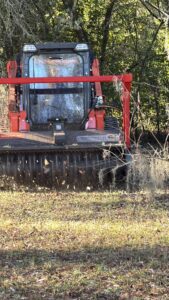
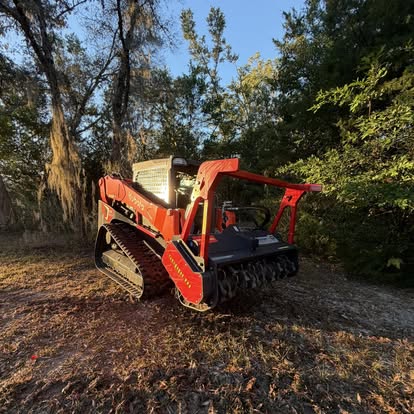
Forestry mulching uses a single machine — typically a tracked or wheeled mulcher — to grind trees, brush, and stumps directly into a layer of natural mulch. Nothing gets hauled away. The material stays on-site and breaks down over time, returning nutrients to the soil.
What does forestry mulching work best for? Forestry mulching works best for overgrown acreage, pasture reclamation, firebreak creation, trail clearing, and any project where you want to improve land without stripping topsoil or disrupting the natural ground cover.
This method is especially effective in Florida because the state’s sandy, nutrient-poor soils benefit from the organic matter the mulch layer provides. It also controls erosion, which matters on sloped or flood-prone parcels across Central Florida.
Did You Know? Forestry mulching can process trees up to 6–8 inches in diameter in a single pass, making it one of the fastest ways to open up heavily wooded acreage.
Our forestry mulching service handles everything from light brush to dense scrubland, leaving your property cleaner and more usable without the mess of debris piles.
What Is Traditional Land Clearing?
Traditional land clearing involves cutting down trees, grinding or pulling stumps, and hauling all debris off the property. It’s a more thorough removal process that leaves the ground bare and ready for whatever comes next — foundations, utilities, driveways, or grading work.
What does land clearing include? Land clearing typically includes tree removal, stump grinding or extraction, brush removal, and debris hauling. The result is a clean, open site ready for immediate construction or development.
This approach is the go-to method for developers, builders, and homeowners who need a completely clear site before breaking ground. When you need every tree, root, and stump gone — and the land needs to be graded or compacted afterward — full land clearing is the right call.
Pro Tip: If your project requires a building permit or involves site grading, traditional land clearing is almost always required. Check with your county before assuming mulching alone will meet code.
Learn more about what goes into a full land clearing project in Central Florida and what to expect from start to finish.
Key Differences: Forestry Mulching vs. Land Clearing
Understanding how these two methods compare helps you make the right call for your specific situation.
Speed and cost — Forestry mulching is typically faster and less expensive on a per-acre basis for mid-size jobs. Because there’s no debris hauling, fewer machines and crew members are needed. Traditional land clearing involves more equipment and disposal logistics, which adds cost.
Soil health — Mulching preserves topsoil and adds organic matter. Traditional clearing strips the land completely, which can lead to erosion and compaction if the site isn’t quickly stabilized or graded.
End use — This is the deciding factor for most landowners. If you’re building a home, installing a septic system, or pouring a concrete pad, you need land clearing. If you’re reclaiming a pasture, managing invasive species, or simply opening up your property for recreational use, forestry mulching is the smarter, lower-impact choice.
Debris — Mulching leaves material on-site. Clearing removes it. If you want a clean, bare lot, clearing is the answer. If you’re fine with — or actively want — a mulch layer to protect soil and reduce weeds, mulching wins.
| Factor | Forestry Mulching | Traditional Land Clearing |
| Debris removal | No — mulch stays on-site | Yes — hauled away |
| Soil preservation | High | Low |
| Best for | Pasture, trails, acreage | Construction, development |
| Typical speed | Faster per acre | Slower due to hauling |
| Cost | Lower for brush-heavy jobs | Higher for full-site prep |
Florida-Specific Considerations
Florida’s environment adds a few wrinkles worth knowing about before you pick a method.
Invasive species — Plants like Brazilian pepper, cogongrass, and torpedo grass are aggressive and widespread. Forestry mulching can help manage these by removing above-ground growth, but follow-up treatment is often needed to prevent regrowth from root systems. A land management professional familiar with Central Florida’s landscape can advise on the right sequence of treatments.
Wetlands and water management — Florida has strict regulations around wetland buffers and stormwater management. According to the Florida Department of Environmental Protection, certain land-disturbing activities require environmental resource permits. Knowing your property’s wetland boundaries before clearing starts can save you from costly violations.
Wildlife and habitat — Florida is home to gopher tortoises, sandhill cranes, and other protected species. The Florida Fish and Wildlife Conservation Commission requires surveys and relocation permits before clearing in areas where listed species may be present. Forestry mulching, with its lower disturbance footprint, can sometimes minimize these concerns.
Did You Know? Gopher tortoise burrows are federally protected. If your property has active burrows, you may need a relocation permit before any clearing begins — regardless of method.
For multi-phase projects, combining both methods often makes the most sense. Start with forestry mulching to open up the land, then follow with targeted land clearing and excavation work in the specific areas where construction will happen.
Which Method Is Right for Your Property?
The honest answer: it depends on what you’re building — or not building.
Choose forestry mulching if you’re reclaiming overgrown acreage, creating trails or firebreaks, managing invasive vegetation, or want to improve your land without a full construction footprint. It’s also a strong choice for agricultural landowners restoring pasture or homeowners who want usable outdoor space without the cost of a full clear.
Choose traditional land clearing if you’re prepping for construction, need stumps fully removed, or your project requires grading and site work. Developers and builders almost always need full clearing before permits and site prep can begin.
Many Florida properties actually benefit from a combination of both. Open the land with mulching, then clear and grade the specific areas where structures or utilities will go. Our team can walk your property and help you map out the most cost-effective approach.
Pro Tip: Getting a site assessment before committing to either method can save you thousands. What looks like a simple mulching job may have stumps or buried debris that changes the scope — and the price.
What to Expect from the Process
No matter which method you choose, a professional land management job in Florida follows a similar path. The process starts with a property walkthrough and free estimate. From there, the crew mobilizes equipment, handles permits or surveys if needed, completes the work, and does a final walkthrough with you.
Good communication throughout matters. You should know what equipment is coming, what the timeline looks like, and exactly what the scope of work covers before anyone breaks ground. If a company can’t answer those questions clearly upfront, that’s a red flag.
At JBS Land Management, we work across Hernando, Citrus, Marion, and Sumter Counties and handle everything from brush-heavy acreage jobs to full construction site prep. See our full list of services or browse our project gallery to get a sense of the kind of work we do.
Wrapping Up
Forestry mulching and traditional land clearing both have a place in Florida land management — the key is matching the method to your goal. For eco-conscious land improvement and pasture reclamation, mulching is hard to beat. For development-ready site prep, full clearing is the path forward.
Ready to figure out the best approach for your property? Contact JBS Land Management for a free on-site estimate. We’ll assess your land, talk through your goals, and give you a clear, honest quote. Call us at 352-610-6853 or reach out through our contact page to get started.
Frequently Asked Questions
Is forestry mulching better than land clearing in Florida? Neither method is universally better — it depends on your end goal. Forestry mulching is ideal for pasture reclamation, trail clearing, and acreage management, while traditional land clearing is required for construction, development, and full site prep. Many Florida properties benefit from a combination of both methods.
How much does forestry mulching cost in Florida? Forestry mulching in Florida typically ranges from $150 to $400 per acre, depending on vegetation density, terrain, and accessibility. It’s generally less expensive than full land clearing because there’s no debris hauling involved. Getting a site-specific estimate is the most accurate way to know your project cost.
Do I need a permit for land clearing in Florida? Permit requirements vary by county and project scope. Projects near wetlands, waterways, or areas with protected species often require environmental resource permits from the Florida DEP or FWC approval. Always check with your local county and a land management professional before clearing begins.
Can forestry mulching remove invasive plants in Florida? Forestry mulching effectively removes above-ground growth from invasive plants like Brazilian pepper and cogongrass. However, many invasive species regrow from root systems, so follow-up herbicide treatment is often needed. A professional familiar with Central Florida vegetation can recommend the right management plan.How long does land clearing take in Florida? Most residential lot and small acreage jobs take one to three days. Larger or more complex sites may take a week or more depending on vegetation density, debris disposal logistics, and whether additional services like grading or excavation are included. Your contractor should give you a clear timeline at the estimate stage.